
Internal & Surface Sizing
Internal & Surface Sizing
Internal and surface sizing play a critical role in modern paper manufacturing by improving the resistance of paper to water, ink penetration, and surface wear while enhancing overall sheet strength and print performance. These processes ensure that paper maintains its structural integrity during printing, writing, coating, and converting operations, delivering consistent quality across diverse end-use applications.
Internal sizing is applied during the wet-end stage of papermaking, where specialized sizing agents are introduced directly into the pulp slurry. This treatment modifies the fiber surface to reduce liquid absorption and control porosity throughout the sheet structure. As a result, internally sized paper exhibits improved dimensional stability, better runnability on high-speed machines, and enhanced resistance to moisture-related deformation. This makes it highly suitable for writing, printing, packaging, and specialty paper grades that demand uniform strength and durability.
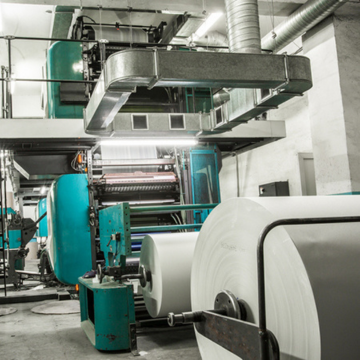
Surface sizing, on the other hand, is applied at the size press or film press after sheet formation. Carefully engineered surface sizing formulations create a protective film on the paper surface, significantly improving surface strength, smoothness, stiffness, and printability. This layer enhances ink holdout, reduces dusting and picking during high-speed printing, and supports superior image sharpness and color reproduction. Surface sizing is particularly valuable for high-quality printing papers, coated base papers, and packaging boards where surface performance directly impacts final product appearance and usability.
Advanced internal and surface sizing solutions are designed to work efficiently across a wide range of fiber compositions, machine conditions, and production speeds. Modern formulations provide excellent retention, rapid curing, and strong compatibility with fillers, retention systems, and strength resins. They also support reduced chemical consumption, improved drainage, and optimized cost efficiency—helping mills achieve both performance and sustainability goals.
Environmental responsibility is another key consideration in contemporary sizing technology. High-performance, low-impact chemistries enable reduced water usage, minimized effluent load, and improved recyclability of finished paper products. These benefits contribute to cleaner production processes while maintaining the strength and protection required for demanding industrial and commercial applications.
By integrating reliable internal and surface sizing programs, paper manufacturers can achieve balanced sheet properties, consistent machine performance, and enhanced end-product value. The result is stronger, smoother, and more durable paper that meets the evolving expectations of printing, packaging, and specialty markets.